Learn how to make soft, creamy scrambled eggs recipe at home using simple ingredients. An easy, healthy breakfast recipe with real cooking tips.
Hello friend…
I hope you’re doing well today.
I was standing in the kitchen when I thought about this. Not planning to write. Just… hungry. The pan was cold. Eggs were on the counter. That familiar moment.
Scrambled eggs Recipe feel like that. Unplanned. Ordinary. Almost boring—until they’re not.
Everyone thinks they know scrambled eggs Recipe. And honestly, most of us learn the hard way. Dry eggs. Burnt butter. Eggs that look fine but feel wrong when you chew them. Been there. Many times.
But when scrambled eggs Recipe are done right—
soft, warm, just barely holding together—
they don’t need anything else.
Why Scrambled Eggs Recipe Stay With You
You can forget fancy recipes.
You can ignore trends.
Scrambled eggs Recipe still show up.
They show up when:
- You wake up late
- You don’t feel like cooking
- You want food, not effort
- You just need something warm
Breakfast… lunch… night snack…
scrambled eggs Recipe don’t care.
And trust me—once you stop rushing them, they start making sense.
A Small Real Moment (Not a Big Story)
This isn’t dramatic.
I remember the morning before work. Nothing special. Just tired. I cracked two eggs without thinking. Didn’t even change clothes. Add salt. Butter in pan. Low heat.
I stirred slowly because I wasn’t fully awake.
The eggs came out soft. Almost creamy. I ate them quietly. Standing. No phone.
That morning felt easier somehow.
Not perfect. Just lighter.
I’ve come back to scrambled eggs Recipe on days like that ever since.
What Scrambled Eggs Recipe Really Are
They’re not complicated.
Scrambled eggs Recipe are simply eggs cooked gently while being moved, so they form soft curds instead of one solid piece.
That’s all.
But texture decides everything.
They can be:
- Soft and loose
- Creamy and comforting
- Light and fluffy
- Or dry and crumbly (we don’t talk about those)
Scrambled eggs Recipe are less about what you add…
and more about when you stop.
Equipment (Use What You Have)
You don’t need special tools.
- One pan
- One bowl
- One fork
- One spatula or spoon
That’s enough.
I’ve made good eggs with worse setups.
Attention matters more than equipment.
Ingredients (Simple, On Purpose)
For one serving:
- 2 eggs
- 1 tablespoon butter (or oil)
- Salt
- Black pepper (optional)
Optional extras if you feel like it:
- Milk or cream (a little)
- Cheese
- Onion or greens
- Chili flakes
But start plain.
Always start plain.
Cooking Method (Slow Is Everything)
This is where most people mess up. Not because they don’t know—
because they hurry.
Step 1: Eggs in a bowl
Crack the eggs.
Add salt now. It blends better this way.
Beat gently. Just enough to mix.
No foam. No stress.
Step 2: Pan and butter
Heat the pan on low to medium.
Add butter.
Let it melt slowly.
If it turns brown too fast—your heat is wrong.
Quiet butter is happy butter.
Step 3: Pour and pause
Add the eggs.
Wait a moment.
Then start moving them slowly.
Small circles. Soft scraping.
Let them decide the pace.
Step 4: Know when to stop
The eggs will look slightly wet.
Glossy. Almost done.
This is when you stop.
Take the pan off the heat before they look perfect.
They finish cooking on their own.
That’s the trick.
Step 5: Plate immediately
Don’t leave eggs sitting in the pan.
They keep cooking.
Add pepper if you like.
Eat while warm.
Texture Reality Check
- Soft and shiny → right
- Dry and broken → too far
- Watery → too cold or not enough fat
Eggs are quiet teachers.
They don’t shout when something’s wrong.
Scrambled Eggs Recipe – Serving Suggestions
- On buttered toast or toasted bread
- With avocado slices and black pepper
- Alongside bacon, sausage, or grilled tomatoes
- With hash browns or roasted potatoes
- In a wrap or breakfast burrito with veggies
- Topped with cheese, herbs, or chili flakes
- With a side salad for a lighter plate
Best served soft and warm right off the pan
Variations (Only If You Want)
Fluffy Style
Add a splash of milk.
Lighter texture. Breakfast vibes.
Creamy Style
Very low heat. Constant gentle movement.
It takes patience. Worth it.
Cheesy Eggs
Turn off the heat first. Add cheese after.
Let it melt slowly.
Veggie Scramble
Cook onions or greens first. Then eggs.
Feels like a full meal.
Spicy Version
Onion, green chili, turmeric.
Simple. Familiar. Comforting.
Scrambled Eggs Recipe – Avoid These Common Mistakes
- High heat cooking → eggs turn rubbery and dry
- Not whisking properly → uneven texture
- Adding salt too early (sometimes) → can make eggs watery; add near the end for better texture
- Overcooking → they keep cooking after you turn off heat
- No fat in pan → sticking + less creamy result
- Constant aggressive stirring → breaks curds too small
- Using a very hot pan at start → causes instant tough eggs
- Waiting too long to serve → scrambled eggs dry out fast
Tip: Low heat + gentle stirring + remove when slightly soft = perfect fluffy eggs.
Scrambled Eggs Recipe – Health Benefits
- High-quality protein – Helps build and repair muscles, keeps you full longer
- Rich in vitamins – Contains B12, B6, and vitamin D for energy, brain, and bone health
- Good fats – Supports hormone balance and nutrient absorption
- Choline source – Important for brain function and memory
- Eye health nutrients – Lutein and zeaxanthin help protect vision
- Low in carbs – Suitable for balanced or low-carb diets
- Supports metabolism – Protein + B vitamins help energy production
Health tip: Use moderate butter/oil and pair with veggies for a more balanced meal.
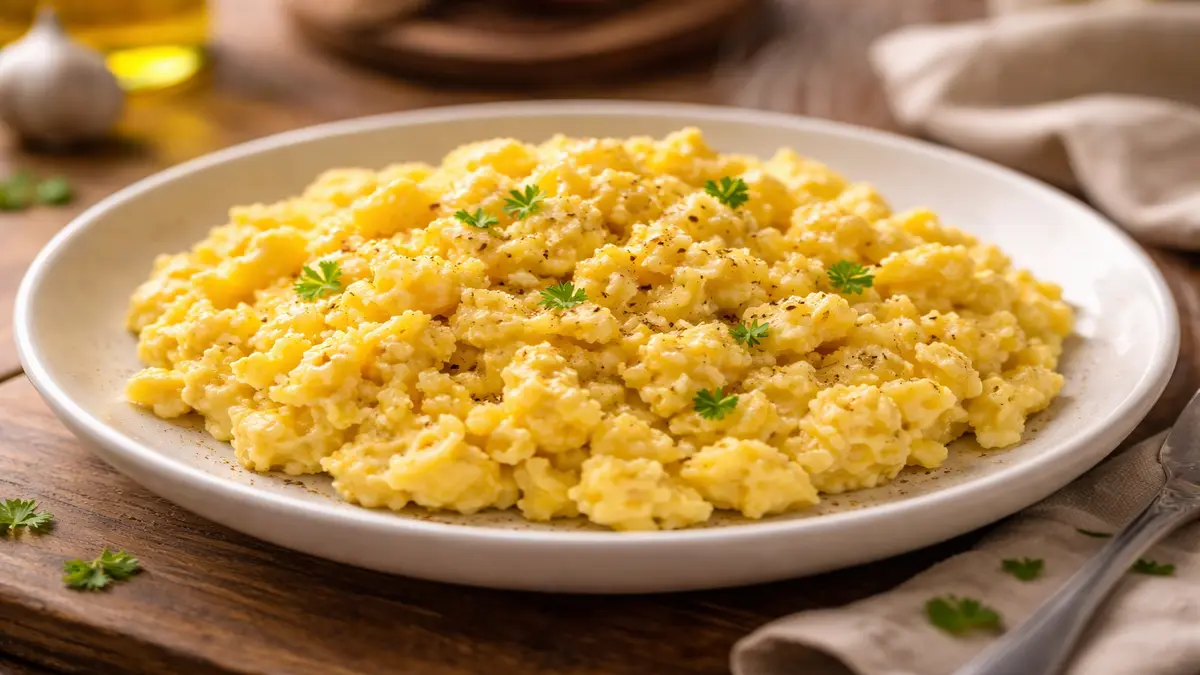
Ingredients
Equipment
Method
- Crack the eggs.
- Add salt now. It blends better this way.
- Beat gently. Just enough to mix.
- No foam. No stress.
- Heat the pan on low to medium.
- Add butter.
- Let it melt slowly.
- If it turns brown too fast—your heat is wrong.
- Quiet butter is happy butter.
- Add the eggs.
- Wait a moment.
- Then start moving them slowly.
- Small circles. Soft scraping.
- Let them decide the pace.
- The eggs will look slightly wet.
- Glossy. Almost done.
- This is when you stop.
- Take the pan off the heat before they look perfect.
- They finish cooking on their own.
- That’s the trick.
- Don’t leave eggs sitting in the pan.
- They keep cooking.
- Add pepper if you like.
- Eat while warm.
- Soft and shiny → right
- Dry and broken → too far
- Watery → too cold or not enough fat
- Eggs are quiet teachers.
- They don’t shout when something’s wrong.
Nutrition (Approx for 2 Eggs)
- Calories: ~190
- Protein: ~12 g
- Fat: ~14 g
- Carbs: almost none
Not diet magic.
Just solid food.
Related Recipes
- Texas Roadhouse Italian Dressing Recipe
- Smoked Chicken Rub Recipe
- Father of the Brine Recipe
- Smoked Chicken Rub
When Scrambled Eggs Feel Right
- When mornings are rushed
- When evenings are quiet
- When you’re not feeling great
- When you don’t want decisions
They don’t demand attention.
They just do their job.
FAQs (Real Answers)-Scrambled Eggs Recipe
1. Why are my scrambled eggs watery?
Usually from high heat or adding salt too early. Cook low and slow, salt near the end.
2. How do I make them fluffier?
Whisk well to add air and cook gently. A splash of milk or cream can help, but not required.
3. When should I stop cooking?
Remove from heat when slightly soft — they keep cooking from residual heat.
4. What’s the best pan to use?
A non-stick pan or well-buttered pan prevents sticking and keeps texture smooth.
5. Can I make scrambled eggs without butter?
Yes, use oil — but some fat is important for texture and flavor.
6. How do I add more flavor?
Try cheese, herbs, black pepper, sautéed onions, or chili flakes.
7. Are scrambled eggs healthy?
Yes — they’re rich in protein, vitamins, and healthy fats when not overloaded with butter or cheese.
8. Why do mine turn rubbery?
Too much heat or overcooking. Eggs need gentle cooking.
Final Thoughts-Scrambled Eggs Recipe
Scrambled Eggs Recipe won’t impress anyone online.
They’re not meant to.
But they’ll feed you when you need something simple.
And sometimes… that’s enough.
Crack two eggs.
Slow down.
Trust me.